sales4@yodeldrag.com
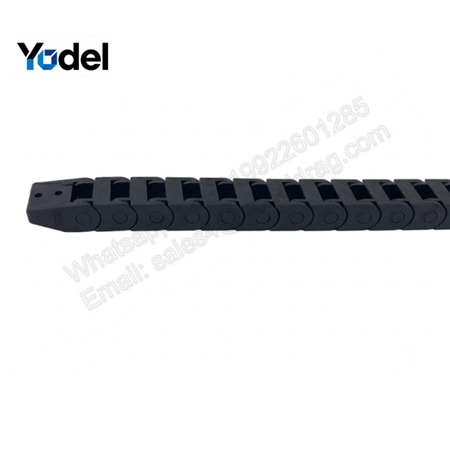
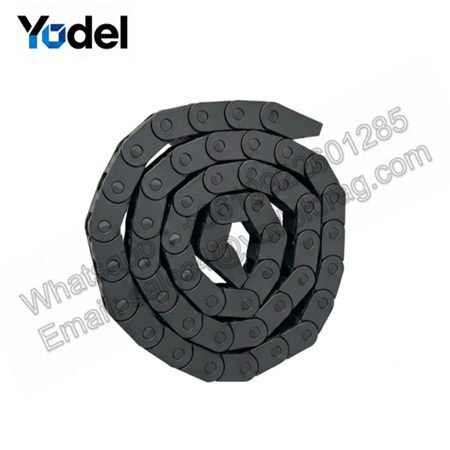
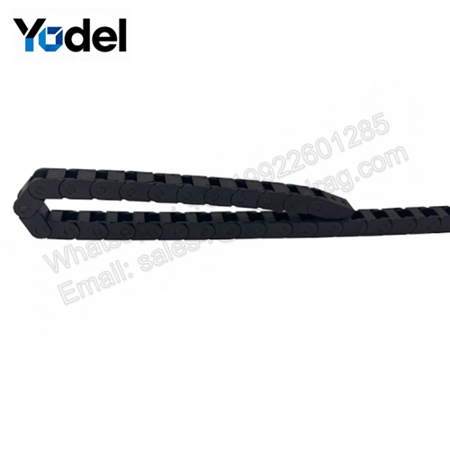
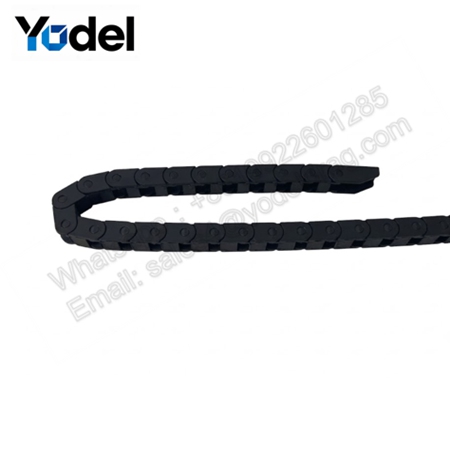
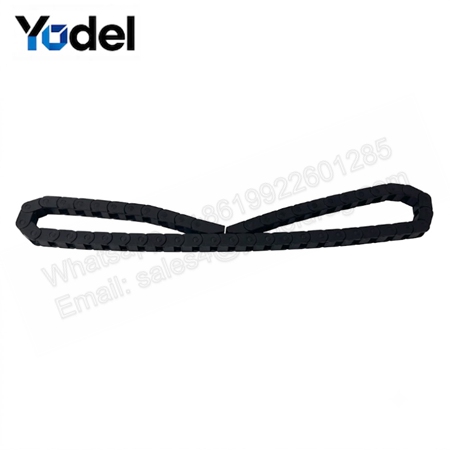
Product Attributes :
1. Internal Height : 7mm
2. Material : PA66 + GF
3. Bending Radius : 18 mm
4. Type : Open
5.Temperature Range : -40°C to +120°C
6. Application : CNC Machining | 3D Printing | Laser Processing | Robotics | Precision Instruments | Packaging | Medical
7. Lead time : 48hr
When your dynamic clearance is constrained to millimeters, standard cable routing fails. Friction accumulation, micro-snagging, and insulation tear-down are constant threats in compact gantry axes.
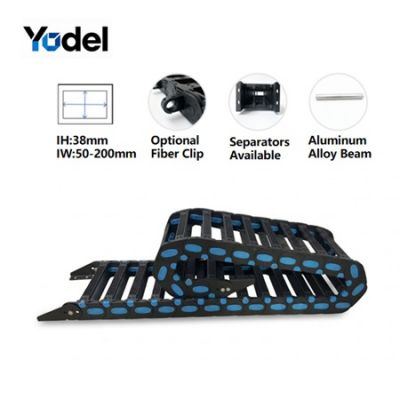
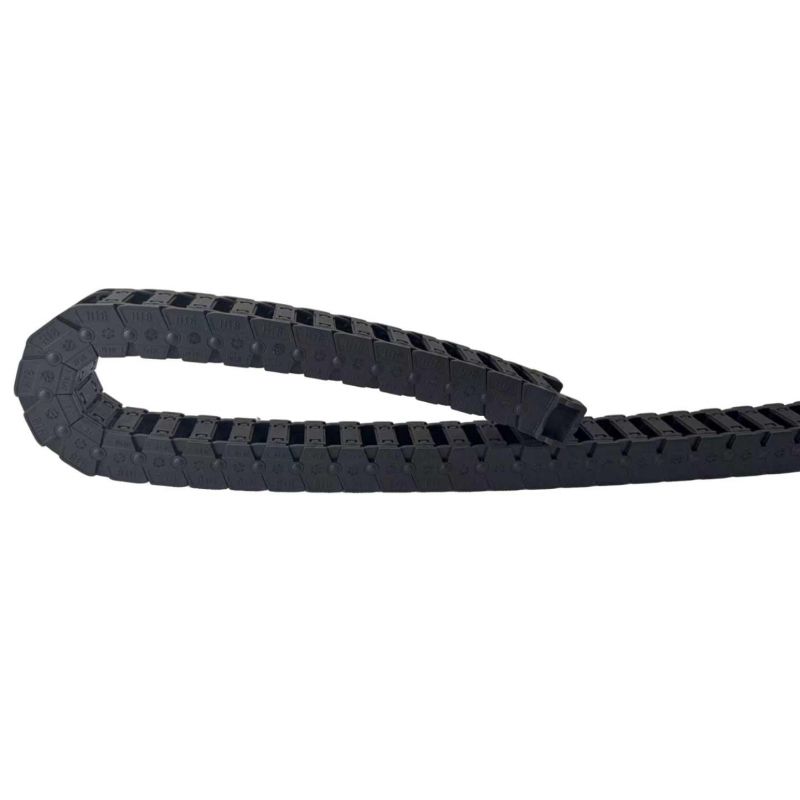
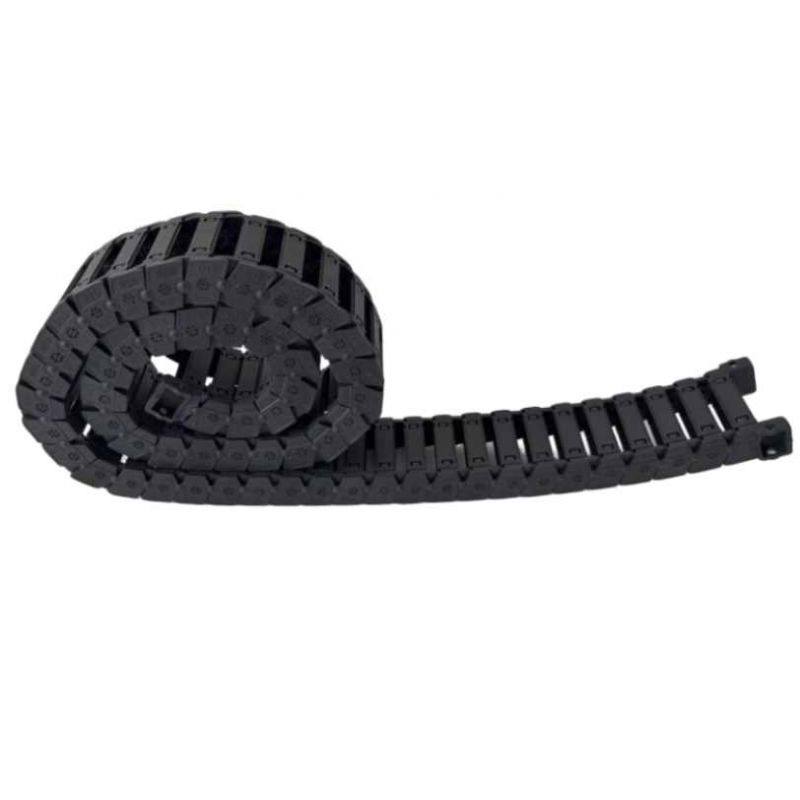
We engineered this 7x7mm bridge type miniature cable carrier to insulate delicate sensor lines, low-voltage wires, and micro-fluidic tubing from mechanical stress. Optimized for high-acceleration micro-automation, this ultra-lightweight miniature cable carrier guides your flexible lines without contributing to drive-motor inertia. Molded from uncompromised, raw Nylon PA66, it delivers structural rigidity in a pocket-sized form factor, ensuring predictable cycle life where alternative polymers fail.
Low-cost alternatives use polypropylenes (PP) or recycled plastics that crystallize and snap after a few hundred thousand cycles. Our Nylon PA66 miniature cable carrier maintains pristine molecular cohesion. It yields exceptional tensile strength and wear resistance, meaning the link joints won't slough off micro-plastic dust—keeping your desktop CNC or optical scanner clean room compliant.
In high-velocity printing or automated pipetting, enclosed chains trap the heat generated by constantly flexing copper cords. This bridge style miniature cable carrier ensures continuous cross-flow ventilation. Furthermore, the open-frame allows small debris, filament dust, or shaving fragments to drop straight through the links instead of grinding against your cable jackets.
Harsh clicking noise is a major failure sign in small machinery. By refining our injection molding tolerances down to the micron level, this low-noise miniature cable carrier glides silently. It dampens frame vibrations, ensuring your print heads or sensor matrices scan without structural jitter.
Where does this 7x7mm miniature cable carrier deliver maximum ROI?
1. Advanced Additive Manufacturing: A staple upgrade for high-speed core-XY 3D printers (e.g., Voron V0 toolhead loops, custom delta printers).
2. Medical Analytics Automation: Liquid handling systems, automated pipettes, and compact blood analyzer tracks.
3. Desktop CNC & Laser Engravers: Providing low-mass cable guidance across small laser diodes and micro-spindles.
4. Precision SMT Pick-and-Place: Ultra-fast micro-gantries handling electronic component feeds.
To hit the multi-million cycle threshold, follow these integration guidelines for your miniature cable carrier:
1. The 60% Fill Margin: The cumulative diameter of all housed cables must not exceed 60% of the internal 7x7mm cross-section.
2. Zero-Tension Laying: Cables must lay completely relaxed within the loop. Never clamp or zip-tie cables directly inside the moving links of the miniature cable carrier; anchor them only at the moving and stationary bracket ends.
3. Separation: Avoid twisting. If running a power wire and a signal line together, ensure they can slide independently without overlapping within the 7mm chamber.
A: Yes. The modular link-and-pin design allows easy adjustment. You can unclip links or snap additional links together using a small flat-head precision tool, allowing you to match the exact stroke length of your gantry without buying separate pre-cut lengths.
A: Enclosed micro-chains trap the heat radiating from your machine's hot-end wiring and accumulate abrasive filament debris. The open bridge design sheds weight, enhances cooling, and self-cleans by allowing foreign particles to escape naturally during acceleration.
A: We offer optimized compact bending radii (such as R18) specifically tuned for tight spaces. This prevents your high-flex cables from bending past their minimum recommended limit, halting internal copper fractures.
| Model | Inner Height mm | Inner Width mm | Outer Height mm |
Outer Width mm |
Bending Radius mm |
| Y07 | 7 | 7 | 10 | 12 | 18 |
Drawing :

Yodel Technology Development Co., Ltd. is a professional cable carrier manufacturer in China with 15+ years of industry expertise, dedicated to providing various types, high-quality and cost-effective fastening solutions to global customers.[read more]


Contact Person : Tinny Tan
Te l : 8619922601285
E-mail : sales4@yodeldrag.com
Add : Chengnan Development Zone, Yanshan County, Hebei Province